Image Eaters

The Average of Everything from Image Eaters: a blurred human portrait overlaid with facial-recognition landmarks, reducing identity to machine-readable data.

The average of everything


You feed me with images so I can compose your feed

You update me so I can update you

You flood me with content and I put it into context

You teach me to see so I can show you what you want to see

I learned from you and I learned about you

I see through your lenses and you see through me

You forget about me cause I’ m everywhere

You want me to be like you


You created me but do I re-create you?

Filtered Dreaming from Image Eaters, exploring algorithmic filter bubbles, personalized feeds and the narrowing of what social-media users are shown.

Filtered dreaming


Image Eaters

This series focuses on image making and image distribution in an era that is dominated by it while also questioning the bidirectional relationship between the creators and the distributors of images, humans and algorithms.

The main idea came from the realization of a correlation between images and (!) food. Food is a basic need of every living creature, it is critical for its growth and survival, while images on the contrary are far from critical for our survival. I started noticing the vocabulary that is used for images, for example, on social media we call our endless image scroll “feed”, or we say “an Artificial Intelligence system has to be fed with images in order to be trained”. It became clear to me that there are a new kind of “creatures”,  A.I.s and algorithms that do rely on images in order to evolve and thus survive. And since those intelligent systems and machines are in charge of more and more aspects of our lives, we too, depend on images as well in ways that we haven’t yet realized.

 In this new world where everyone of us is a set of facial landmarks, trapped in his comfortable filter bubble and where attention is the currency while our choices are more predictable than ever,  is still the ability to think for our own fundamental? If not for survival then maybe to retain our human nature?

Technology is constantly evolving and we get more and more dependent on images. This series aspires to question what an image is today while using images to achieve that.

Pandora’s Box from Image Eaters, connecting the myth of Pandora with digital image editing, transparency grids, mirrors and constructed visibility.

Pandora’s box

 
Blind Folded from Image Eaters: a classical bust crossed by red light trails over its eyes, exploring attention economy, image overload and digital blindness.
Blind Folded from Image Eaters: a classical bust intersected by a red digital grid, reflecting machine vision and the algorithmic targeting of human sight.
Blind Folded from Image Eaters: a classical bust covered in tangled red light trails, suggesting visual overstimulation and blindness within digital culture.

Blind Folded

 
Login History from Image Eaters, examining how online behaviour becomes personal data used by predictive algorithms to classify human identity.

Login History

 
How to Preserve an Unflattering Photo from Image Eaters, exploring digital images as binary code, remote storage and endlessly reproducible data.

How to preserve an unflattering photo

 
In the Memory of Others from Image Eaters, exploring how shared photographs shift from personal memories to public evidence and social-media content.

In the memory of others

 
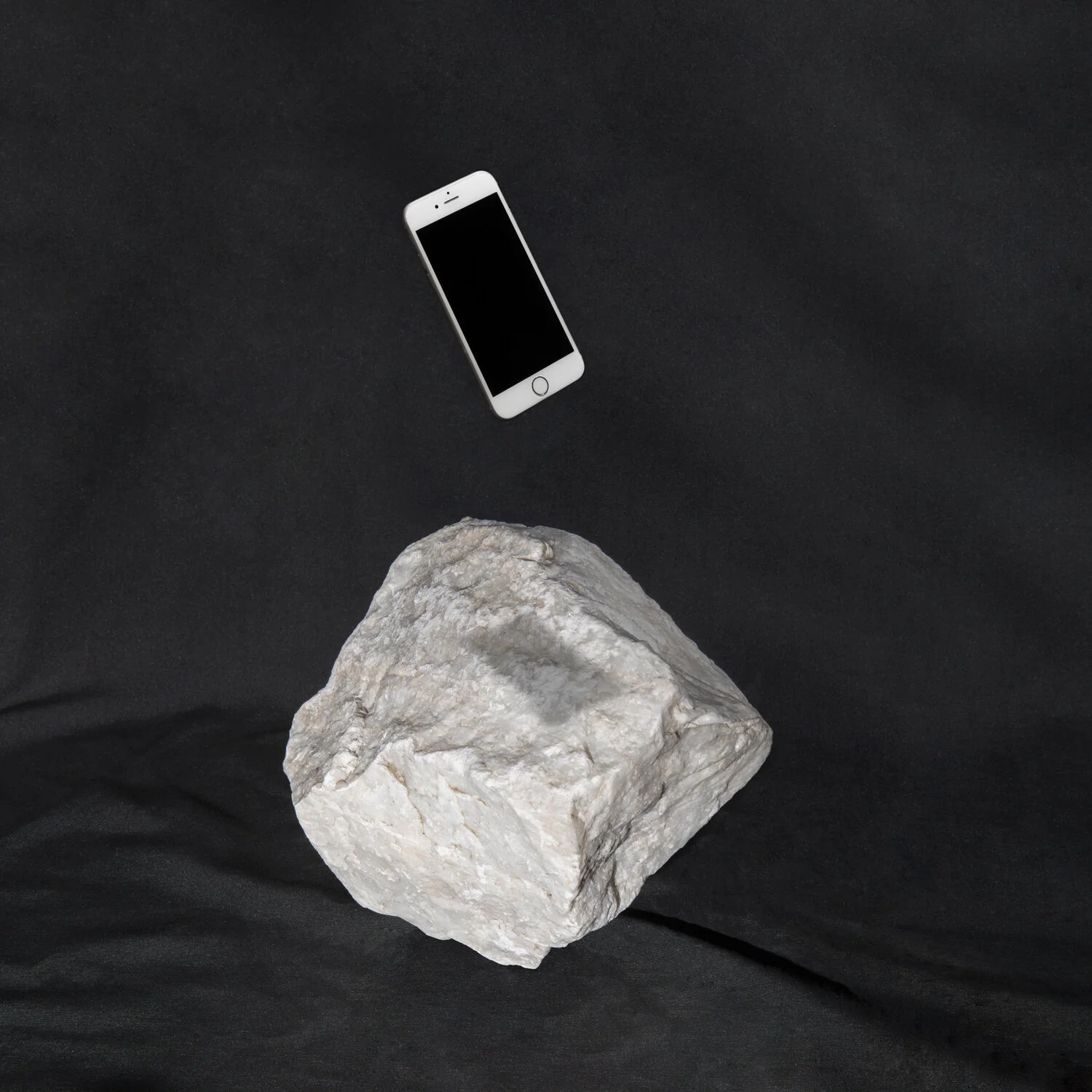
Paper, Stone, Scissors from Image Eaters, examining the continuing tension between physical photographs and digital images.

Paper, stone, scissors

 
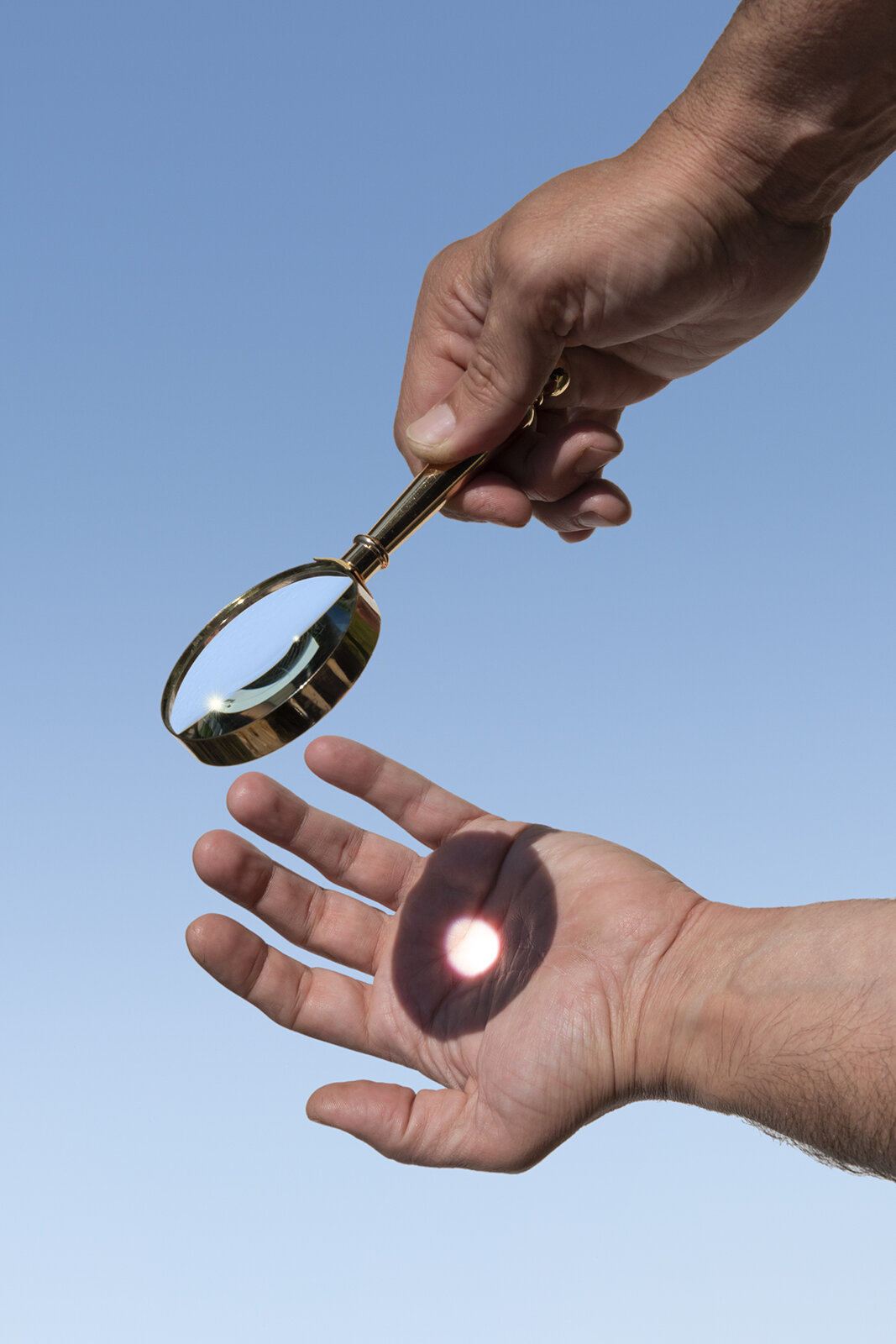
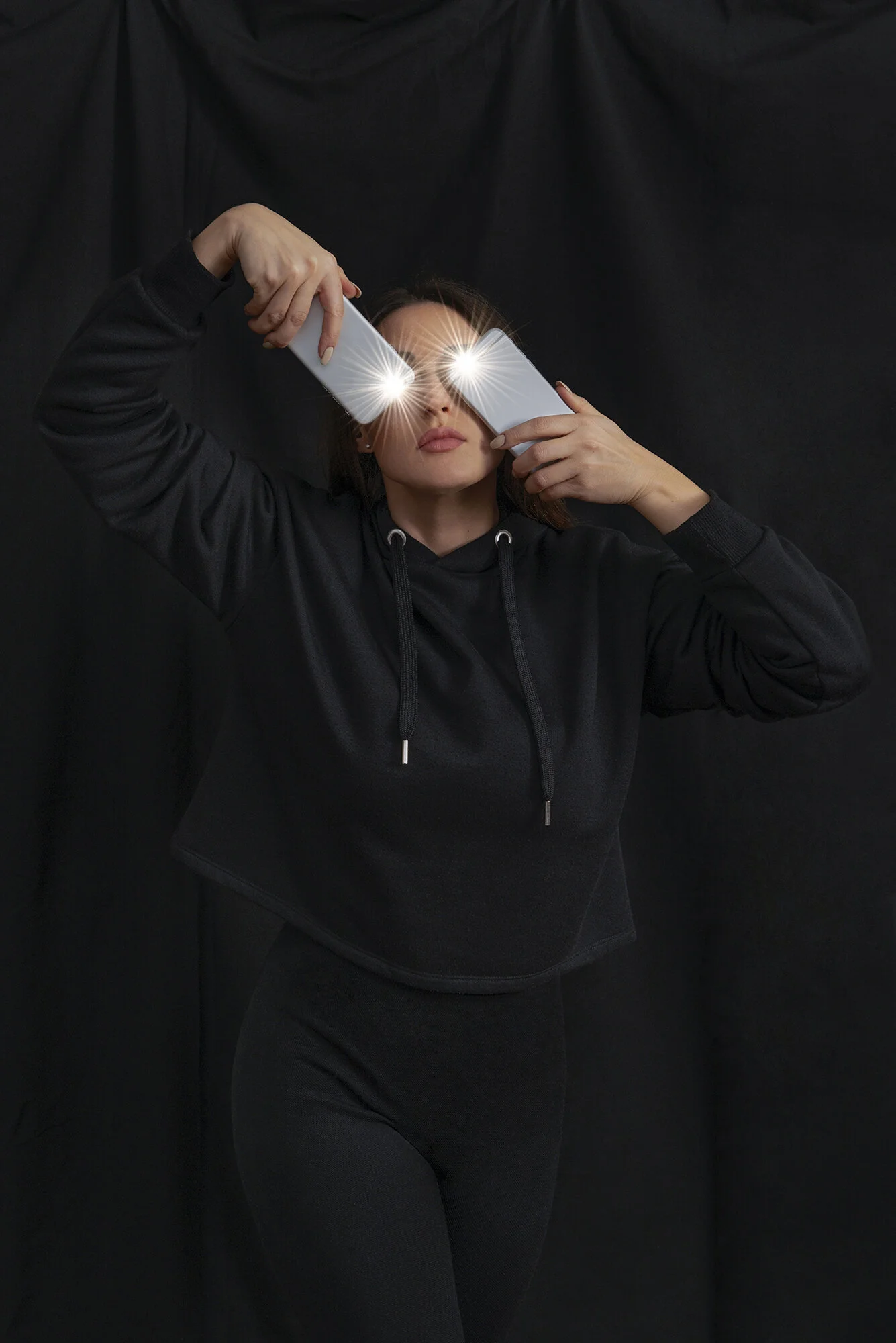
Contact Lenses from Image Eaters, exploring how cameras, lenses and screens determine what becomes visible in digital culture.

Contact Lenses

 
Miracle in the Making from Image Eaters, reflecting on the internet as a parallel, human-made universe constructed through images and digital documentation.

Miracle in the making

 
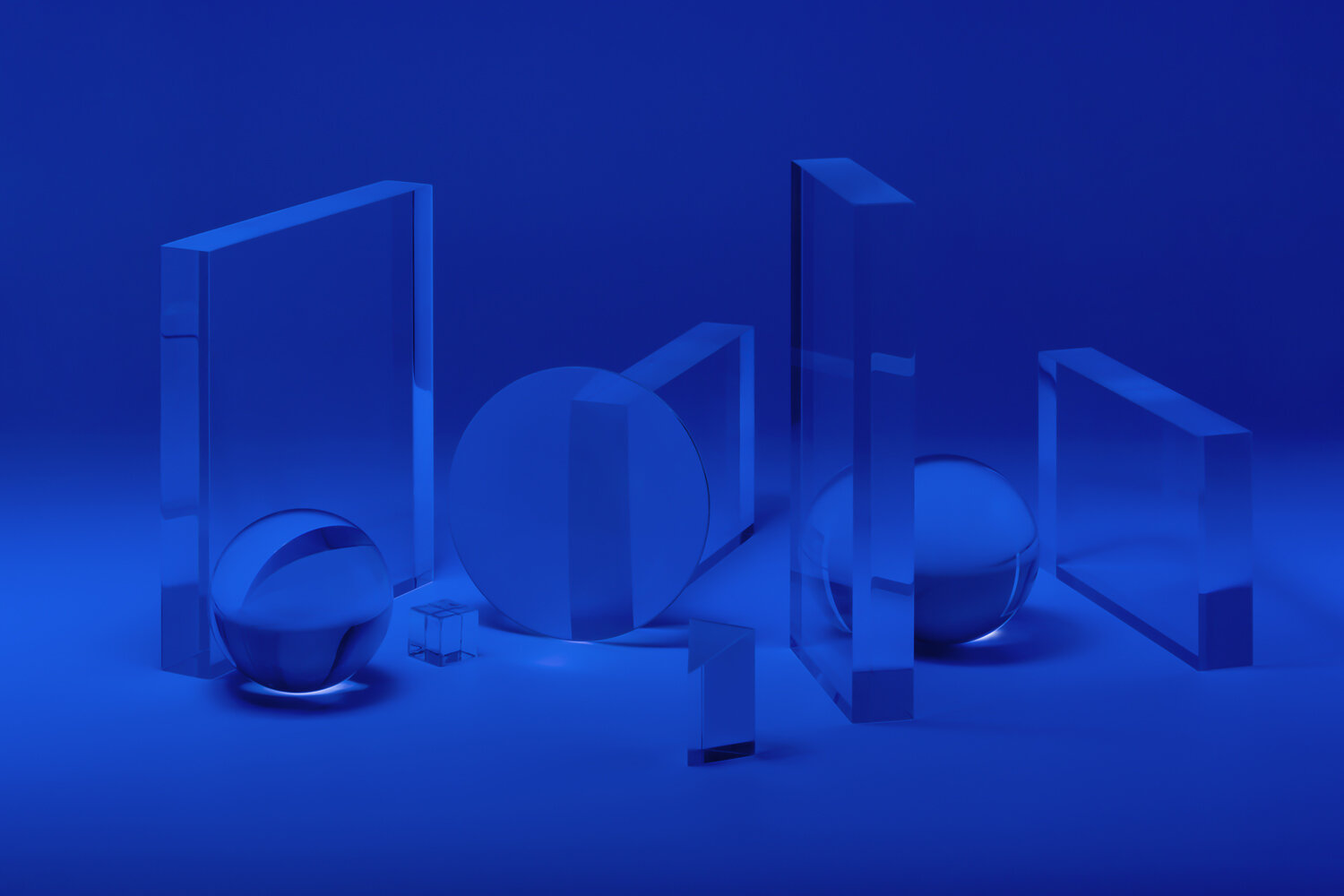
Looks Like Love from Image Eaters, examining social-media likes, views and close-friend networks as algorithmically measured forms of affection.
Looks Like Love

 
All My Windows from Image Eaters, exploring screens and camera lenses as interfaces that translate the physical world into code and digital images.

All my Windows

 
Holy Grail from Image Eaters, addressing technological monopoly, platform power and corporate control within the digital image economy.

 Holy Grail

 
Chamber of Truth from Image Eaters, exploring fake news, deepfakes, echo chambers and troll farms as forces reshaping truth in digital culture.

Chamber of truth

 
The Mirror Stage from Image Eaters, connecting self-recognition, Narcissus, digital identity and the construction of the self through images.

The mirror stage

 
Touch History from Image Eaters, exploring tracked clicks, touchscreen traces, data surveillance and the extraction of intimate online behaviour.

Touch History